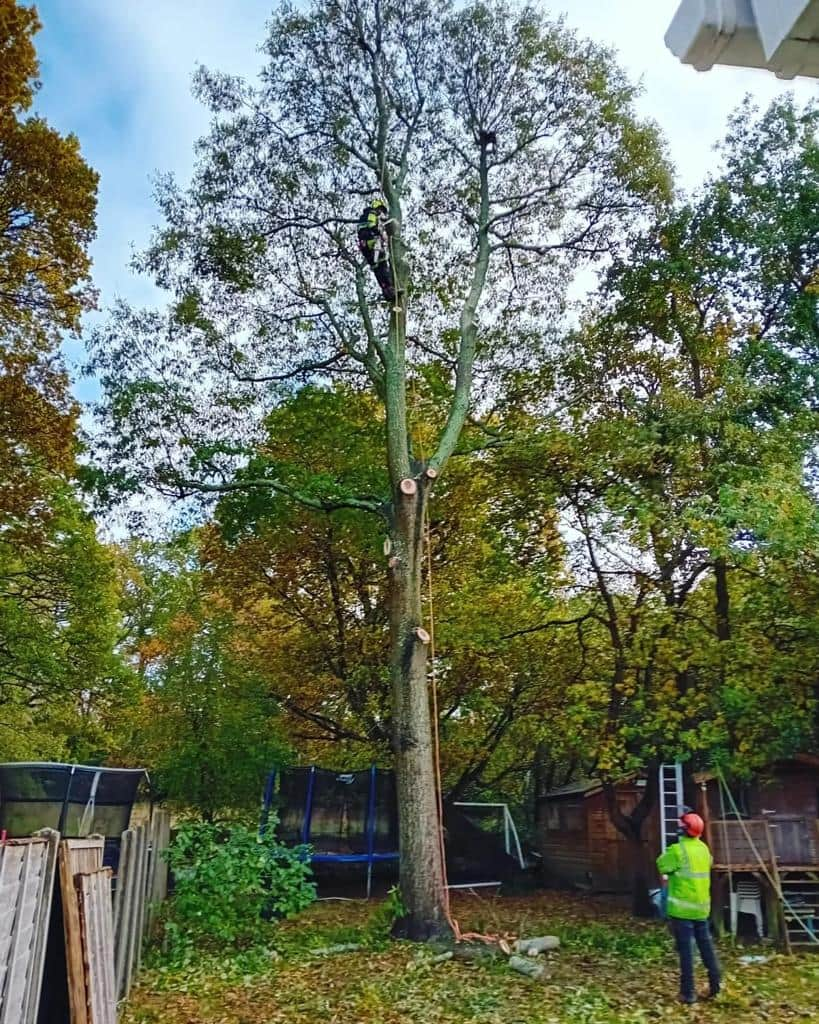
Trees provide shade, improve the appearance of gardens and support local wildlife. However, like any living part of a property, they require attention to remain healthy and structurally sound. Changes in weather, soil conditions, pests and natural ageing can all affect a tree’s condition, sometimes causing problems that are not immediately obvious.
Regular tree inspections help identify early signs of disease, structural weakness and environmental stress. By recognising these issues before they become more serious, property owners can make informed decisions about the care their trees need.
For homeowners and landowners in Oxted, Surrey, routine inspections are an important part of maintaining attractive, healthy and safe outdoor spaces.
Why Regular Tree Inspections Matter
A tree can appear healthy from a distance while developing problems within its trunk, branches or root system. Some defects become visible gradually, while others may only be noticed after strong winds or heavy rainfall.
A professional inspection provides an opportunity to assess the tree as a whole, including its growth, structure and surrounding environment. This helps establish whether routine maintenance is sufficient or whether more specific tree surgery is required.
Identifying Early Signs of Tree Disease
Trees can be affected by fungal infections, bacterial diseases and other conditions that weaken their health over time. Common warning signs include discoloured leaves, unusual growth patterns, dead branches, lesions on the bark and visible fungal growth.
Some diseases affect the roots or internal structure before obvious symptoms appear in the canopy. An inspection can help identify potential concerns and determine whether further assessment or appropriate treatment is needed.
Early identification is particularly useful because some tree health problems can spread or become more difficult to manage if left unattended.
Detecting Structural Weakness
A tree’s structural condition is just as important as its overall health. Cracks in the trunk, weak branch unions, damaged limbs and uneven growth can all indicate potential weaknesses.
Large dead branches may become unstable, especially during periods of strong wind. Similarly, multiple stems growing from a weak union can increase the likelihood of splitting as the tree develops.
A tree surgeon can assess these features and recommend suitable work, such as selective pruning, crown reduction or the removal of hazardous branches where necessary.
Checking Root Health and Stability
The root system provides essential support and absorbs the water and nutrients required for healthy growth. Although roots are mostly hidden underground, changes around the base of a tree can sometimes indicate a problem.
Warning signs may include exposed or damaged roots, disturbed soil, fungal growth near the base and a sudden change in the tree’s position. Construction work, soil compaction and changes in drainage can also affect root health.
Regular inspections help identify potential concerns before they have a greater impact on the tree’s stability or development.
How Inspections Help Maintain Healthy Tree Growth
Tree inspections are not only about identifying hazards. They also help ensure that trees develop in a balanced and appropriate way for their surroundings.
Managing Overgrown or Crossing Branches
Branches that cross, rub against one another or grow too closely together can create wounds in the bark. These damaged areas may provide opportunities for pests and disease to affect the tree.
Selective pruning can remove problematic growth while retaining a suitable natural shape. It also helps improve the structure of the canopy without removing more material than necessary.
Identifying the Need for Crown Maintenance
As trees mature, their canopies may become dense or uneven. Depending on the species and growing conditions, some branches may extend too far, become damaged or create an imbalance.
Crown reduction may be appropriate in certain situations to reduce the overall size while maintaining the tree’s natural form. Crown thinning can also help manage canopy density by selectively removing branches.
The right approach depends on the species, age, condition and location of the tree. Excessive cutting should be avoided because it can place unnecessary stress on the tree and affect future growth.
Monitoring Seasonal Changes
Trees respond differently throughout the year. Changes in leaf colour, flowering, fruiting and branch growth can provide useful information about their condition.
Comparing observations over time can help identify gradual deterioration that might otherwise go unnoticed. Regular checks also provide an opportunity to assess damage following storms or particularly dry periods.
When Should Trees Be Inspected?
The appropriate inspection frequency depends on factors such as the tree’s age, species, condition, location and exposure to environmental stresses. Younger trees may need monitoring as they establish, while mature trees with previous structural concerns may require more frequent attention.
It is sensible to arrange an inspection when:
- Large branches appear dead, cracked or damaged.
- The tree develops an unexpected lean.
- Fungal growth appears on the trunk or around the base.
- Leaves show unusual discolouration or premature loss.
- The tree has suffered damage during severe weather.
- Nearby ground conditions have changed following excavation or construction.
Trees close to buildings, pathways, parking areas and frequently used garden spaces deserve particular attention because any falling branches could affect people or property.
Why Professional Tree Inspections Are Valuable
Some tree problems are difficult to recognise without knowledge of tree species, growth habits and structural development. A professional tree surgeon can assess visible defects, consider the surrounding conditions and recommend appropriate maintenance.
Depending on the findings, this may involve pruning, crown work, deadwood removal or further investigation into possible disease or structural concerns. In some cases, the best recommendation may simply be to monitor the tree rather than carry out unnecessary work.
This considered approach helps protect the tree’s long-term health while addressing potential safety concerns.
Conclusion
Regular tree inspections play an important role in identifying disease, structural weakness and changes in growth before they develop into more serious problems. They also help property owners understand which maintenance tasks are genuinely necessary to keep their trees healthy and their surroundings safe.
For professional tree assessments and maintenance in Oxted, NS Tree Surgery Oxted can help identify potential issues and recommend suitable tree surgery. Contact the team to discuss your trees and arrange an inspection for your property.
Call us on: 01883 771 495
Click here to find out more about NS Tree Surgery Oxted
Click here to complete our contact form and see how we can help with your tree needs.